
Legal Practice Areas
Nursing Home Abuse – Warning Signs

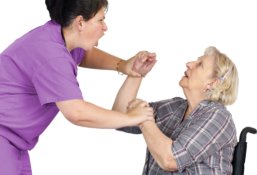
We strive to do our best for our loved ones. However, there are times when even our best efforts just aren’t enough.
When a loved one requires full-time care, moving them to a nursing home may be the best option. We trust the professionals that work in these facilities to provide our loved one with the care that we cannot provide ourselves.
When nursing home staff or facilities fail to provide the standard of care expected of them, it can result in injury to the residents. If your loved one has been injured as a result of the negligent or reckless actions of nursing home staff, you may be able to file a claim for nursing home abuse.
What other names for nursing homes go by?
Nursing homes are facilities where the aging or people that require full-time care live. Nursing homes differ in terms of the type of care provided as well as the type of patients that the nursing home accommodates. You may come across nursing homes that are long-term care facilities, board and care homes, continuing care retirement communities or assisted living facilities. All these facilities provide long term care for those that require it.
Signs of Nursing Home Abuse You Should Look Out For
The Centers for Disease Control (CDC) estimate that more than 1.5 million people currently live in nursing homes around the country. A study by the National Center on Elder Abuse (NCEA) indicates that as many as 10 percent of residents in nursing homes have been the victim of some sort of abuse. This suggests that many nursing home residents do not report abuse when it occurs. It is therefore even more important to be able to identify occasions of nursing home abuse and protect your loved one. The following are some warning signs that your loved one may be the victim of nursing home abuse.
1. Unexplained physical injuries
This is one of the most obvious signs of nursing home abuse. Staff may lash out at residents and cause physical harm by pinching, hitting, scratching, pushing or even biting residents. You may note that your loved one is suffering more injuries than they used to or that they may have injuries that staff cannot provide a reasonable explanation for. For example, you may notice that your loved one has broken bones that the staff may have attributed to falling. However, your loved one may not have a history of falling.
Look for physical injuries such as bruising, welts or scars on your loved ones body. Inquire over serious injuries such as broken bones, sprains or dislocations.
2. Refusal by staff to leave you alone with the nursing home resident
It is the norm to be allowed to visit your loved one and spend some time alone with them. This helps to ensure the psychological and emotional wellbeing of your loved one. However, if you find that nursing home staff will not let you be alone with your loved one during a visit, you should be concerned about their motives. They may be intimidating your loved one to prevent them from reporting abuse. They may also be present to prevent you from taking notice of signs of abuse.
3. Unusual changes in behavior of your loved one
There are medical conditions that can result in changes in behavior of our loved ones. However, if your loved one has not been diagnosed with a condition that causes alterations in behavior and is exhibiting changes in behavior, your loved one may be the victim of abuse.
Some changes in behavior to look out for include mumbling, rocking behaviors, sucking one’s thumb, unexplained fear, depression, confusion and withdrawal. These are common signs that your loved one may be suffering some sort of abuse.
4. Development of STI’s
Has your loved one contracted a sexually transmitted infection (STI) or other genital infection while living in a nursing home? This could be a sign of sexual abuse. It is important to have your loved one examined by a gynecologist to determine whether they have been the victim of sexual abuse. Some other signs of sexual abuse include bruising around the breasts or genitals, stained or bloodied underwear, anal or vaginal bleeding that isn’t related to any medical condition your loved one is suffering.
5. Dehydration or malnutrition
If your loved one is exhibiting signs of malnutrition or dehydration that is unrelated to any medical condition they are suffering, they may be the victim of abuse. Nursing home staff may be withholding food or drink as a form of abuse. For example, staff may withhold food as part of ‘disciplinary’ action against your loved one. Your loved one may also stop eating as a result of psychological or physical abuse they are suffering at the hands of the staff at the nursing home.
You should therefore be on the lookout for signs of dehydration as well as sudden weight loss.
If you suspect that your loved one is a victim of nursing home abuse, get in touch with us to speak with an experienced nursing home abuse lawyer for guidance.
What Our Clients Say


Helped me to choose which course would be best!
From day 1 Frank was able to give me several different options and helped me to choose which course would be best for me in my family law case. Everything was done quickly and without problem. I walked away from court and what seemed like a never ending battle completely satisfied with the outcome. I would recommend Frank and his firm to anyone looking for an attorney who really knows their stuff and cares about their clients.
Grace